



GABA Receptor
Gamma-aminobutyric acid Receptor; γ-Aminobutyric acid Receptor
GABA receptors are a class of receptors that respond to the neurotransmitter gamma-aminobutyric acid (GABA), the chief inhibitory neurotransmitter in the vertebrate central nervous system. There are two classes of GABA receptors: GABAA and GABAB. GABAA receptors are ligand-gated ion channels (also known as ionotropic receptors), whereas GABAB receptors are G protein-coupled receptors (also known asmetabotropic receptors). It has long been recognized that the fast response of neurons to GABA that is blocked by bicuculline and picrotoxin is due to direct activation of an anion channel. This channel was subsequently termed the GABAA receptor. Fast-responding GABA receptors are members of family of Cys-loop ligand-gated ion channels. A slow response to GABA is mediated by GABAB receptors, originally defined on the basis of pharmacological properties.
All Product Categories
-
GABA Receptor Inhibitors
(152)
View all products
-
GABA Receptor Agonists
(189)
View all products
-
GABA Receptor Antagonists
(136)
View all products
-
GABA Receptor Activators
(69)
View all products
-
GABA Receptor Modulators
(93)
View all products
-
GABA Receptor Controls
(4)
View all products
-
GABA Receptor Ligands
(16)
View all products
-
GABA Receptor Related Products (777)
Related Products (777)

-
Antibodies (14)
-
Related Compound Screening Libraries (1)
-
CGP36216 hydrochloride
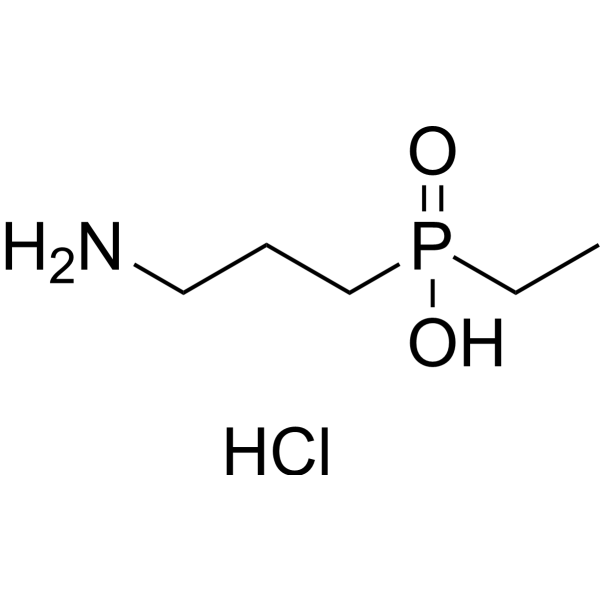 0 ImagesCat. No.: HY-103518ACAS No.: 1781834-71-6CGP36216 hydrochloride is a selective antagonist at GABA presynaptic receptor. CGP36216 binds to GABAB receptor with a Ki value of 0.3 μM. CGP36216 hydrochloride can be used for research of anxiety and trauma-related disorders.
-
GABAA receptor modulator-14
 0 ImagesCat. No.: HY-184478CAS No.: 3103822-75-6GABAA receptor modulator-14 is an orally active, blood-brain barrier permeable selective positive allosteric modulator (PAM) of extrasynaptic δ-containing GABAA receptors (α4β3δ subtype) with an EC50 of 0.8 μM. GABAA receptor modulator-14 selectively enhances tonic neuronal inhibition by potentiating GABA-evoked currents mediated by extrasynaptic δ-GABAARs, produces rapid sustained antidepressant effects, elevates slow-wave NREM sleep and shows no addiction liability in mice. GABAA receptor modulator-14 can be applied to major depressive disorder (MDD) and comorbid insomnia research.
-
S-8510 phosphate
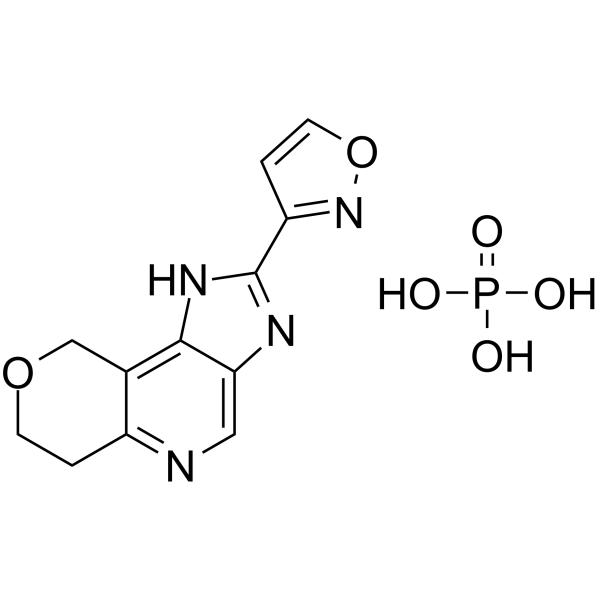 0 ImagesCat. No.: HY-103225CAS No.: 151466-23-8Synonyms: SB-737552 phosphateS-8510 (phosphate) is an inverse Benzodiazepine (BDZ) receptor agonist, with Kis of 34.6 nM, 36.2 nM for –GABA and +GABA respectively.
-
Necopidem
 0 ImagesCat. No.: HY-108223CAS No.: 103844-77-5Necopidem (Compound 6) is a GABA A receptor modulator. Necopidem can be used in research on neurological disorders such as anxiety.
-
Ginsenoside Rc (Standard)
 0 ImagesCat. No.: HY-N0042RCAS No.: 11021-14-0Synonyms: Panaxoside Rc (Standard)Ginsenoside Rc (Standard) is the analytical standard of Ginsenoside Rc. This product is intended for research and analytical applications. Ginsenoside Rc, one of major Ginsenosides from Panax ginseng, enhances GABA receptorA (GABAA)-mediated ion channel currents (IGABA). Ginsenoside Rc inhibits the expression of TNF-α and IL-1β.
-
Bamaluzole
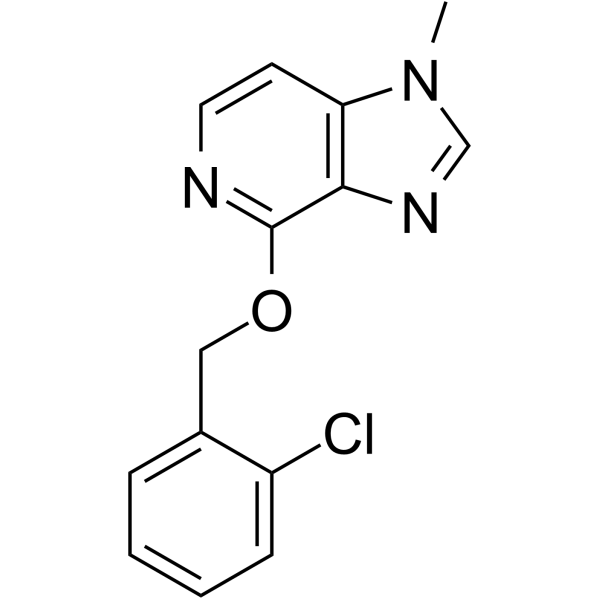 0 ImagesCat. No.: HY-100124CAS No.: 87034-87-5Bamaluzole is a GABA receptor agonist extracted from patent WO 2012064642 A1.
-
Dulozafone
 0 ImagesCat. No.: HY-106670CAS No.: 75616-02-3Synonyms: F1933Dulozafone (F1933) shows anticonvulsant activity and can be used for epilepsy research.
-
Flutazolam
 0 ImagesCat. No.: HY-111481CAS No.: 27060-91-9Synonyms: MS 4101; Ro 7-6102Flutazolam (MS 4101; Ro 7-6102) is a medicine acts on benzodiazepine receptors of the brain and relieves anxiety or tension.
-
Chlormethiazole (edisylate)
 0 ImagesCat. No.: HY-129105ACAS No.: 1867-58-9Chlormethiazole (edisylate) is a sedative-hypnotic with active allosteric modulatory activity at GABAA receptors.
-
Baclofen-d5 hydrochloride
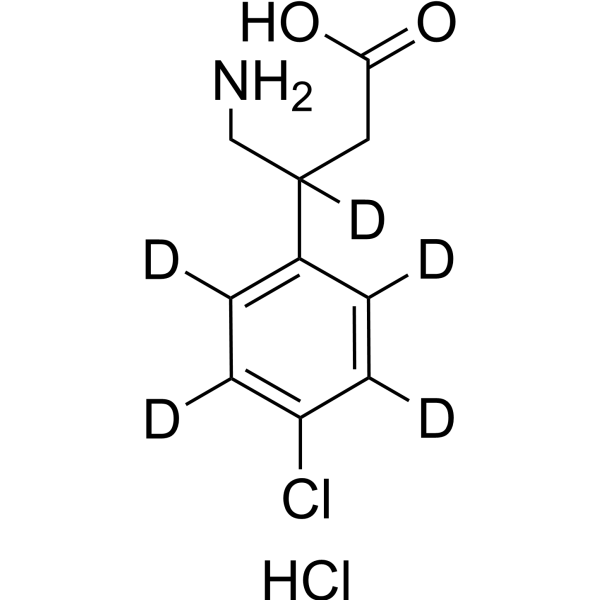 0 ImagesCat. No.: HY-B0007S2CAS No.: 2012598-58-0Baclofen-d5 hydrochloride is deuterated labeled Baclofen (HY-B0007). Baclofen, a lipophilic derivative of γ-aminobutyric acid (GABA), is an orally active, selective metabotropic GABAB receptor (GABABR) agonist. Baclofen mimics the action of GABA and produces slow presynaptic inhibition through the GABAB receptor. Baclofen has high blood brain barrier penetrance. Baclofen has the potential for muscle spasticity research.
-
Inidascamine
 0 ImagesCat. No.: HY-168977CAS No.: 903884-71-9Synonyms: RL-007; FSV7-007Inidascamine is the modulator for cholinergic, glutamatergic, and GABAB receptor, and can be used for researchs of schizophrenia.
-
GL-II-73
 0 ImagesCat. No.: HY-185978CAS No.: 2133456-91-2GL-II-73 is a selective, orally active and blood-brain barrier permeable positive allosteric modulator of α5GABAA receptor, acting on the benzodiazepine-binding site of GABAA receptors. The binding selectivity of GL-II-73 for the α5 subtype is 6-, 11- and 12.5-fold higher than that for the α2, α1 and α3 subtypes, respectively. GL-II-73 reverses pilocarpine-induced hyperactivation of dopamine neurons in the ventral tegmental area, improves working memory and pyramidal neuron dendritic morphology in 5xFAD mice, but does not reduce β-amyloid load. GL-II-73 can be used in research related to Alzheimer's disease and temporal lobe epilepsy with comorbid psychosis.
-
GABAB receptor antagonist 2
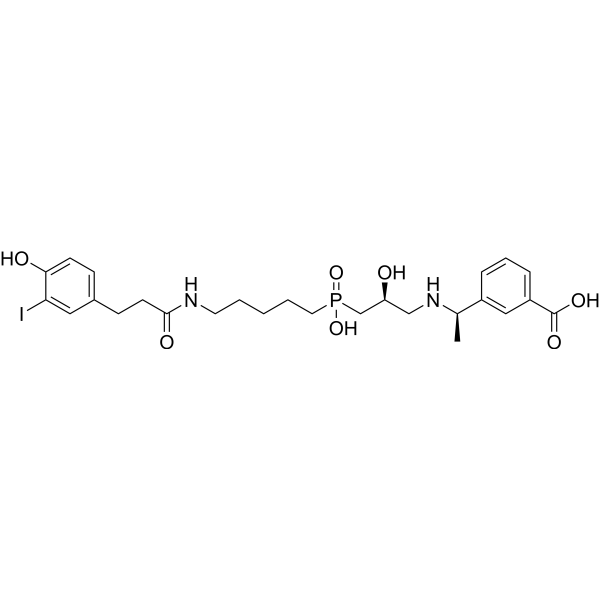 0 ImagesCat. No.: HY-123301CAS No.: 200402-50-2GABAB receptor antagonist 2 is a GABAB receptor/b> antagonist.
-
TTFB
 0 ImagesCat. No.: HY-46286CAS No.: 352560-76-0Synonyms: N-(4-tert-butyl-1,3-thiazol-2-yl)-3-fluorobenzamideTTFB (N-(4-tert-butyl-1,3-thiazol-2-yl)-3-fluorobenzamide) is a selective, non-competitive zinc-activated channel (ZAC) antagonist. TTFB inhibits Zn2+- and H+-induced ZAC currents with IC50 values of 3 μM and 8.5 μM, respectively, and has an IC50 of 4.7 μM against spontaneous activity. TTFB shows no significant agonistic, antagonistic or modulatory activity towards representative classical Cys-loop receptors including m5-HT3AR, hα3β4 nAChR, hα1β2γ2S GABAAR and hα1 GlyR. TTFB can be used to investigate the physiological and pathological functions of ZAC.
-
Bodipy TMR-X muscimol
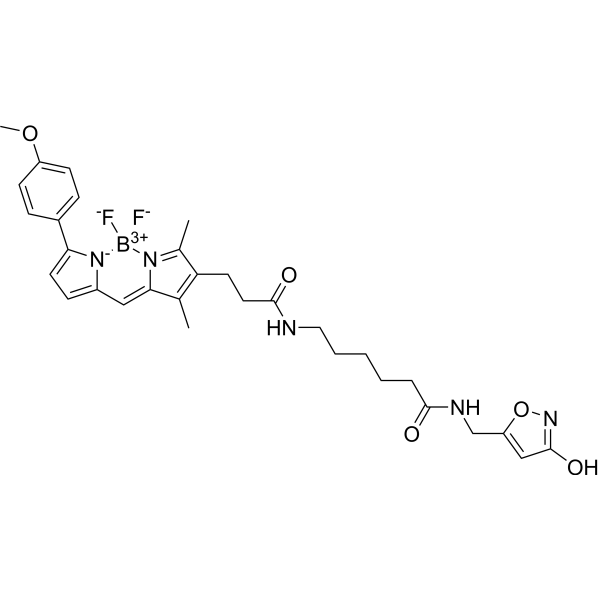 0 ImagesBodipy TMR-X muscimol is a Bodipy labeled Muscimol (HY-N2313) (Ex=543 nm, Em=572 nm). Muscimol is a GABAA agonist. Bodipy TMR-X muscimol can be used for imaging the spread of reversible brain inactivations.
-
Carbiphene hydrochloride
 0 ImagesCat. No.: HY-105567ACAS No.: 467-22-1Carbiphene hydrochloride is a GABAA receptor allosteric modulator. Carbiphene hydrochloride inhibits [35S] TBPS binding and enhances [3H] muscimol binding on rat forebrain membranes, acting on specific GABAA receptor subsets. Carbiphene hydrochloride can be used in research related to schizophrenia.
-
2'MeO6MF
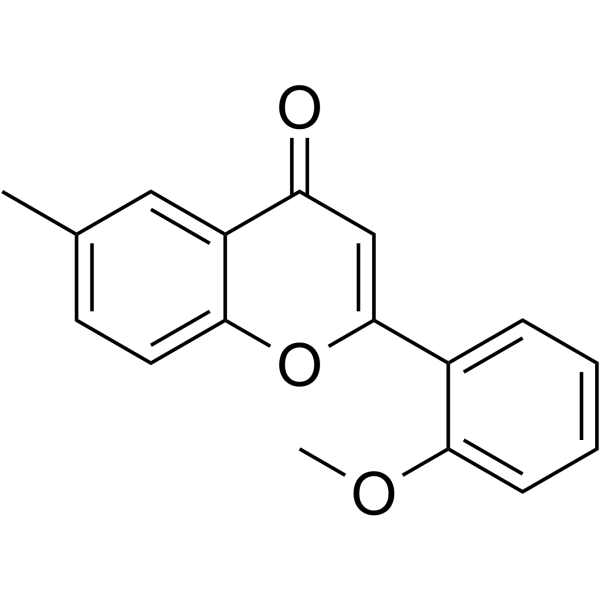 0 ImagesCat. No.: HY-131997CAS No.: 89112-85-62'MeO6MF is a brain-penetrant positive allosteric modulator at α2β1γ2L and all α1-containing GABAA receptors. 2'MeO6MF also can directly activate α2β2/3 and α2β2/3γ2L GABAA receptors. 2'MeO6MF has anxiolytic and psychomotor stabilizing properties. 2'MeO6MF offers neuroprotection and improved functional recovery and dampens the stroke-induced inflammatory response.
-
12,14-Dichlorodehydroabietic acid
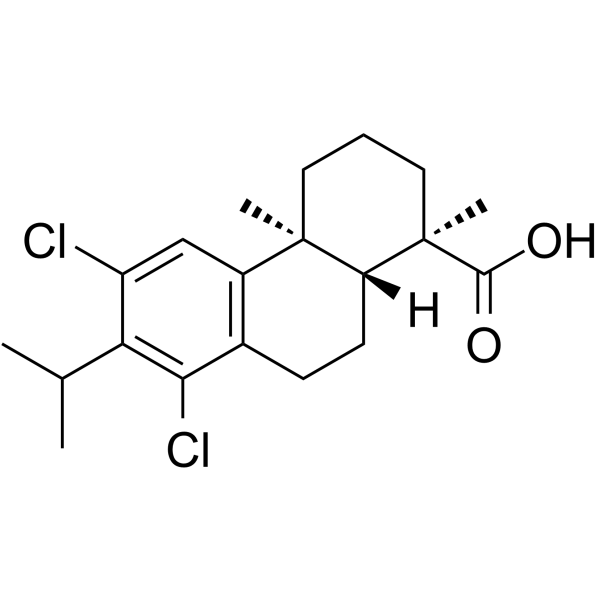 0 ImagesCat. No.: HY-133596CAS No.: 65281-77-812,14-Dichlorodehydroabietic acid, a chlorinated resin acid, is a potent Ca2+-activated K+ (BK) channel opener. 12,14-Dichlorodehydroabietic acid blocks GABA-dependent chloride entry in mammalian brain and operates as a non-competitive GABAA antagonist. 12,14-Dichlorodehydroabietic acid increases cytosolic free Ca2+ and stimulates transmitter release.
-
(+)-Bicuculline methochloride
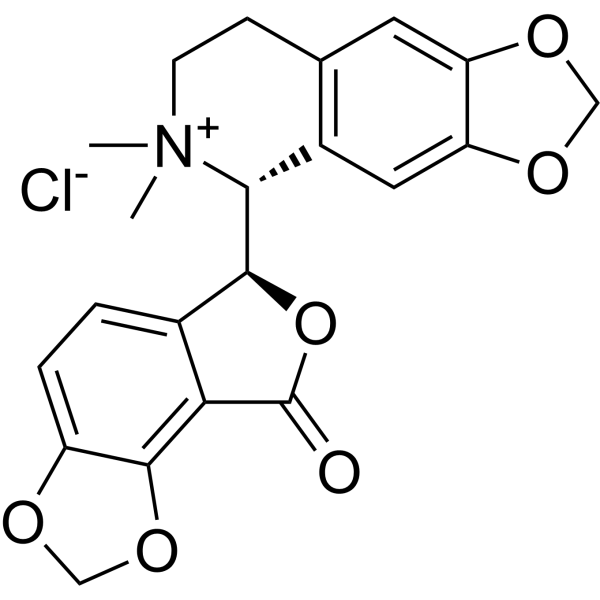 0 ImagesCat. No.: HY-100783ACAS No.: 53552-05-9(+)-Bicuculline methobromide is a potent GABAA blocker. (+)-Bicuculline methobromide alters membrane properties and firing pattern. (+)-Bicuculline methobromide reduces the Apamin-sensitive afterhyperpolarization, while Apamin is a toxin isolated from bee venom to block small conductance Ca2+ -activated K+ channels. (+)-Bicuculline methobromide facilitates burst firing via blocking apamin-sensitive Ca2+ -activated K+ current.
-
17β-Estradiol sulfate-d6 sodium
 0 ImagesCat. No.: HY-W743264Synonyms: 17β-Estradiol 3-sulfate-d3 sodium17β-Estradiol sulfate-d3 sodium (17β-Estradiol 3-sulfate-d3 sodium) is the deuterium labeled 17β-Estradiol sulfate sodium (HY-141672). 17β-Estradiol sulfate sodium, also known as β-Estradiol 3-sulfate sodium salt, is a neuroactive steroid.




